You may have seen the title and wondered if I have gone crazy. “Of course there is such a thing as United States citizens. What else would you call those who live in the United States?” As you will see, the answer will shock you as much as it did when I first came across it.
This article is a part of my larger article “From Republic to Corporation: The Legal Transformation of American Governance.” However, much the information presented here is something that I came across more recently and deserves its own separate article.
Whereas “From Republic to Corporation” goes over much more history than what I present here, this article is the “punch line” of that article.
With that, allow me to present irrevocable proof that there is no such thing as a United States Citizen.
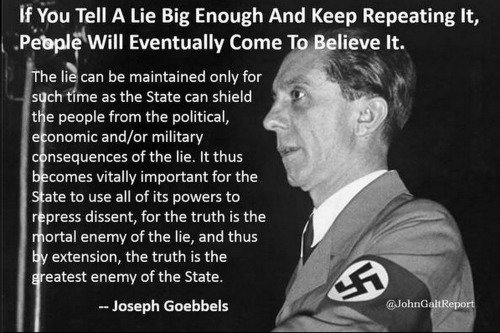
Read the pictured quote carefully.
Independence Day is a day of celebration as well as reflection and contemplation. Celebration that we can still have relative freedom. Reflection and contemplation for the “relative” part.
America started off as a constitutional republic, not a democracy. This is a very significant difference. In a constitutional republic, everyone – INCLUDING THE GOVERNMENT – is subject to the constitution of the country. Whereas, in a democracy the majority can simply vote to get rid of the constitution.
If you look at the Declaration of Independence, you can find the name of this republic: the “States of America.” In this document, “united” is not part of the name, just a simple adjective saying that the States united.
However, this all changed in 1871. Congress passed the District of Columbia Organic Act of 1871, which established Washington D.C. as its own city-state – much like the Vatican and the City of London – and limited its authority to the ten square miles it was allocated. More importantly, it established the United States (note capitalization), or UNITED STATES, as a corporation. This can be found in UCC (Uniform Commercial Code) 9-307[1], which says, “The United States is in the District of Colombia,” and 28 U.S. Code 3002[2] defines “United States” as “(A) a Federal corporation, (B) an agency, department, commission, board, or other entity of the United States, or (C) an instrumentality of the United States.”
Here it is in plain English. The “United States” as referred to in any legal document of the United States refers to the Federal corporation located in Washington D.C, not the sovereign States of America who united beginning in 1776.
The CEO of this corporation, its president, sits in Washington D.C. The sovereign States of America and the corporation of the United States are two entirely separate entities. If you claim you are a citizen of the United States, you are claiming to be a resident of Washington D.C. and are therefore subject to whatever laws it passes.
Since its inception, the United States Corporation – WHICH EVERYONE THINKS IS THE COUNTRY FOUND IN 1776 – has been the front duping the American national sovereign people into its corporate system. The UNITED STATES is the de facto government, while the States of America is the de jure government.
Under President Franklin D. Roosevelt’s “New Deal,” all those who were willing were given a social security number. This created what is known as a “straw man” (after the Straw Man in the Wizard of Oz, which HAS NO BRAIN). Your straw man is a fictitious, artificial “person”/corporation the government made in your name and does business through. Your straw man can be identified easily because the name is in all capital letters (example: AUSTIN DEN HOED).
You may well as, “How are they able to do this?”
One way that they are able to do this is using the law of the sea.
There are two different kinds of laws in the world: those based on the law of the land, know as Common Law or Natural Law, and those based on the law of the sea, known as Maritime Law or Admiralty Law. Common Law preserves the inalienable rights of those on land. Maritime Law grants rights that are legal to conduct merchant, banking, corporate, and international commerce. Common Law defines what is lawful. Maritime law defines what is legal to conduct commerce and transcends international boundaries legally.
You may say, “Well, I live on land. Therefore, Admiralty Law does not apply to me.” This is where you are incorrect. The “powers that shouldn’t be” have manipulated Admiralty Law to include those on land. Here’s how.
Ships traverse water. All ships are referred to as female. Thus, a woman is a ship. The man is a fabricator. Man delivers the “seamen” to the woman, the “vessel,” who carries this “live stock” for 9 months. At the end of the 9 months, the woman’s water breaks, and she goes to a hospital to give “birth.”
When a ship comes to dock, it is tied off at “berth.” The captain submits a “manifest of berth” for the ship. This manifest is a list of items that are being “delivered.” The dock master signs the manifest claiming the shipment, including all “live stock,” as property of the “ward.”
When a woman arrives at the hospital “ward,” the woman “delivers” the “live stock” through “labor.” The dock master, the “doc”-tor, will untie the cargo from the ship by cutting the umbilical cord. By signing the “certificate of live birth,” the parents are informing the doctor that the stock has been delivered and can be claimed by signature. The doctor signs the certificate, making you property of the ward and making you lost at sea as unclaimed corporate property.[3]
In your “absence,” the US government created a fictitious legal person to represent you in all of their commerce. As stated earlier, this “straw man” is denoted by all capital letters. I found it interesting to note the Style Manual for the US government[4] says, “Names of vessels are quoted in matter printed in other than capitals and lowercase roman, even if there is italic type available in the series.” What this means is that all vessels should be printed in all capital letters. Look at the name plates of most US and British ships. They are in all capital letters. Recall, also, the above-mentioned correlation between ship vessels and human vessels.
You have tied yourself to this “straw man” in many ways: birth certificate, driver’s license, marriage license, income tax, hunting license, W-4 forms, etc. What most people do not realize is that being tied to this corporation keeps them in slavery. Remember when I said that the head of the United States Corporation is in Washington D.C? Well, your straw man also resides in Washington D.C. Your straw man is a citizen of the United States and must obey the laws of the United States, and if you have tied yourself to it, you must obey as well. There are a few ways to get out of and untether yourself from the system, but you must educate yourself on how to live outside the system, otherwise you will be tricked right back in.
At this point, some of you may still not be convinced. You may rightfully question, “All this talk about the twisting of the English language is nothing more than conjecture and coincidence. Do you have legal proof that ‘US citizen’ is a corporate entity? What gives the Federal government the power to create these corporations in the first place?”
We must continue with some more legal definitions. Then I will conclude with a little more history.
We must begin with the definition of “person.” When describing your “straw man,” I mentioned that it was a fictitious, artificial “person.” If you have ever looked at any legal document, it almost exclusively refers to men and women as “person,” “persons,” or “citizens.” The definitions of these words are vital to this conversation.
26 US Code 7701[5] defines “person” as “shall be construed to mean and include an individual, a trust, estate, partnership, association, company, or corporation.”
Furthermore, Black’s Law Dictionary states that there are two kinds of “persons,” natural and artificial:
“A natural person is a human being. Artificial persons include a collection or succession of natural persons forming a corporation.”[6]
Thus, your “straw man” could be referred to as an ens legis, defined by Black’s Law Dictionary as “an artificial being, as contrasted with a natural person; applied to corporations, considered as deriving their existence entirely from the law.”[7]
I am not a “person” or “citizen” in any legal sense. Regardless of what Black’s Law Dictionary states, I don’t even like to refer to myself as a “natural person” or “individual,” because those definitions can be too easily misconstrued. Rather, I am a human. My ens legis is a person and citizen.
Speaking of which, what about that word “citizen?” What does it mean? Black’s Law Dictionary has some VERY interesting things to say about it.
According to the 5th Edition, “‘Citizens’ are members of a political community who, in their associated capacity, have established or submitted themselves to the dominion of a government for the promotion of their general welfare and protection of their individual as well as collective rights.”[8]
This is fascinating enough. This means that, since the United States is its own entity as separate from the United States of America, if you claim to be a US citizen, you claim to be a member of this corporation, and must submit to whatever rules and regulations they pass, whether they are Constitutional or not.
However, the definition gets even more fascinating when you look at the 4th Edition of Black’s Law Dictionary. As one of its definitions, it says:
“A corporation is a citizen of state under whose laws it is created and a nonresident of every other state… It is not a citizen within meaning of federal constitution declaring citizens of each state entitled to privileges and immunities of citizens in the several states or within Fourteenth Amendment prohibiting states from abridging privileges and immunities of citizens of United States.”[9]
Again, we see a tie between “citizen” and “corporation.” However, notice this definition takes it one step further.
Not only must the persons and citizens of the United States obey the rules of this corporation, because they themselves are corporations via the connections to their ens legis, they are not entitled to the privileges and immunities granted in the federal constitution, nor are they entitled to the right prohibiting states from infringing these privileges.
Yet, one question remains: What gives the Federal government the right to create these corporations, over which they are able to exert such totalitarian control?
The answer is very simple, and we must turn to what Supreme Court Justice Samuel Miller said during The Slaughter-House Cases brought before the Supreme Court in 1873. Remember that this is only a mere two years after the passing of the District of Columbia Organic Act of 1871.
At the time, New Orleans, LA, was suffering issues surrounding the slaughterhouse industry. Up-river of the city, butchers slaughtered hundreds of thousands of animals per year, dumping all the waste materials from these animals into the Mississippi River, which flowed right through the city, causing a number of disease outbreaks.
To solve this problem, the Louisiana legislature passed an act to incorporate the slaughterhouse industry in the area so it could better regulate the disposal of the animal entrails. Members of the Butchers’ Benevolent Association challenged the constitutionality of the corporation, claiming it violated the Fourteenth Amendment.
What did the Supreme Court rule on this case? It was Justice Miller who wrote the majority opinion, which ruled in favor of the slaughterhouse corporation and upheld the constitutionality of Louisiana’s use of its policing power to regulate the industry. Aside from what was mentioned before, this case would change the course of the United States of America, and nobody knows about it.
Justice Miller said, “That wherever a legislature has the right to accomplish a certain result, and that result is best attained by means of a corporation, it has the right to create such a corporation, and to endow it with the powers necessary to effect the desired and lawful purposes…”[10]
In other words, ANY legislature of the government has the power to create ANY corporation they wish and to give it as much or little power they wish. These corporations then become the working arm of the government, as stated in the definition of “corporation” in Black’s Law Dictionary, 4th Edition:
“A public corporation is one created by the state for political purposes and to act as an agency in the administration of civil government”[11]
This is opposed to “private corporations,” which are “those founded by and composed of private individuals, for private purposes, as distinguished from governmental purposes, and having no political or governmental franchises or duties.”11
Let’s finish by taking a close look at the 14th Amendment, as this will be the final nail in the coffin in the entire person/citizen vs. man/human idea.
For those who need a refresher, the 14th Amendment did the following:
- It granted citizenship to all persons “born or naturalized in the United States,” and provided all citizens with “equal protection under the laws,” extending the provisions of the Bill or Rights to the states.
- It authorized the government to punish states that abridged citizens’ right to vote by proportionally reducing their representation in Congress.
- It banned those who “engaged in insurrection” against the United States from holding any civil, military, or elected office without the approval of 2/3 of both the House and Senate
- It prohibited former Confederate states from repaying war debts and compensating former slave owners for the emancipation of their slaves.
- It granted Congress the power to enforce this amendment.
This Amendment followed directly from aftermath of the American Civil War. Before the freeing of the slaves in America, they were not considered citizens of the States that their owners resided in. They were simply property under their owners and had no rights. After the war and the slaves were freed, there came an issue of how to integrate all these people into society.
It must be noted that at the time, the 14th Amendment was not a terrible idea. The government was trying to reorganize the turmoil between the North and South as to how the “Negroes” were to be released from slavery. The North was opposed to slavery, of course, and the South didn’t want the released slaves to have the same rights as the rest of the “state citizens.” The compromise was the creation of the “Federal citizen” or “US citizen” category to accommodate these individuals.
Again, to quote Justice Miller:
“…all the negro race who had recently been made freemen, were still, not only not citizens, but were incapable of becoming so by anything short of an amendment to the Constitution. To remove this difficulty primarily, and to establish a clear and comprehensive definition of citizenship which should declare what should constitute citizenship of the United States, and also the citizenship of a State, the first clause of the first section was framed.”[12]
Keep this bolded part in mind, as it will be incredibly important later.
Another case from the California Supreme Court stated:
“The history and aim of the Fourteenth Amendment is well known… That purpose was to confer the status of citizenship upon a numerous class of persons domiciled within the limits of the United States, who could not be brought within the operation of the naturalization laws because native born, and whose birth… had at the same time left them without the status of citizenship. These persons were not white persons, but were… persons of African descent, who had been held in slavery in this country, or… were the native-born descendants of slaves. Prior to the adoption of the Fourteenth Amendment it was settled that neither slaves, nor those who had been such, nor the descendants of these… were capable of becoming citizens of the United States. (Dred Scott v. Sanford, 19 How. 393.) The Thirteenth Amendment, though conferring the boon of freedom upon native-born persons of African blood, had yet left them under an insuperable bar as to citizenship; and it was mainly to remedy this condition that the Fourteenth Amendment was adopted.”[13]
Thus, for the first time, there came about a distinction between “State citizen” and “US citizen.” Before this, people were classified by the state they lived in (“Iowan,” “Texan,” “Virginian,” etc.).
This is no more clearly explained than in the Slaughter-House Cases, as seen from Justice Miller below.
“The first section of the fourteenth article, to which our attention is more specially invited, opens with a definition of citizenship — not only citizenship of the United States, but citizenship of the States. No such definition was previously found in the Constitution, nor had any attempt been made to define it by act of Congress… It had been said by eminent judges that no man was a citizen of the United States, except as he was a citizen of one of the States composing the Union. Those, therefore, who had been born and resided always in the District of Columbia or in the Territories, though within the United States, were not citizens.”[14]
Even the Wikipedia page draws this conclusion: “The Slaughter-House Cases, 83 U.S. (16 Wall.) 36 (1873), was a landmark U.S. Supreme Court decision which ruled that the Privileges or Immunities Clause of the Fourteenth Amendment to the U.S. Constitution only protects the legal rights that are associated with federal U.S. citizenship, not those that pertain to state citizenship.”[15]
The 1940 Madden vs. Kentucky Supreme Court case also ruled the following:
“…the privileges and immunities clause protects all citizens against abridgment by states of rights of national citizenship as distinct from the fundamental or natural rights inherent in state citizenship. This Court declared in the Slaughter-House Cases that the Fourteenth Amendment as well as the Thirteenth and Fifteenth were adopted to protect the Negroes in their freedom. This almost contemporaneous interpretation extended the benefits of the privileges and immunities clause to other rights which are inherent in national citizenship but denied it to those which spring from state citizenship.”[16]
Hopefully, you see by now that there is indeed a distinct difference between “US citizenship” and “State citizenship,” that the United States is a corporation. If you claim that you are a citizen of the United States then you are claiming to be a member of this corporation. This corporation has created a fictitious legal person who must abide by their rules. By signing under penalty of perjury on any relevant legal document that this person is you (driver’s license, tax forms, etc.) you are also claiming to be a citizen of the United States. By claiming to be such, you are subject to their rules.
This final statement – “by claiming you are a thing, then you are a thing” – is what is known as “naturalization.” An example would be in the Section 1 of the 14th Amendment:
“All persons born or naturalized in the United States, and subject to the jurisdiction thereof, are citizens of the United States and of the State wherein they reside.”
What is the definition of “naturalization”? We can find it in 8 US Code 1101,[17] which says:
“The term ‘naturalization’ means the conferring of nationality of a state upon a person after birth by any means whatsoever.”
This is how by simply signing under penalty of perjury that you are a US Citizen on something as simple as a W4 form for your job, you have tied yourself to the corporation, and by claiming, “Yes, this ens legis ‘straw man’ is me,” you have further entangled yourself in its web.
However, what if I told you that THERE IS NO SUCH THING AS A US CITIZEN? The very foundation that brought this class of citizenship is ENTIRELY BUILT ON A FARCE!!! According to Congressional Records, the 14th Amendment was never constitutionally ratified into the Bill of Rights.
The Congressional Records from June 13, 1967,[18] state, and I quote:
“We have tolerantly permitted the habitual misuse of words to serve as a vehicle to abandon our foundations and goals. Thus, the present use and expansion of the 14th amendment is a sham serving as a crutch and hoodwink to precipitate a quasi-legal approach for overthrow of the tender balances and protections of limitation found in the Constitution.”
Furthermore, these records state:
“The purported 14th Amendment of the United States Constitution is and should be held ineffective, invalid, null, void, and unconstitutional for the following reasons:
“1. The Joint Resolution proposing said Amendment was not submitted to or adopted by a Constitutional Congress.
“2. The Joint Resolution was not submitted to the President for his approval.
“3. The proposed 14th Amendment was rejected by more than one-fourth of all states then in the Union, and it was never ratified by three-fourths of all the States in the Union.”
As these documents show, 15 of the then 37 States rejected the proposed 14th Amendment, thereby nullifying it and making it impossible for its ratification.
A question then arises. How on earth did this amendment become a part of the Constitution if not enough of the required States ratified it? These Congressional Records also answer this question:
“The Reconstruction Acts of Congress unlawfully overthrew their existing governments, removed their lawfully constituted legislatures by military force, and replaced them with rump legislatures which carried out military orders and pretended to ratify the 14th Amendment…
“In spite of the fact that the Secretary of State in his first proclamation, on July 20, 1868, expressed doubt as to whether three-fourths of the required states had ratified the 14th Amendment, Congress nevertheless adopted a resolution on July 28, 1868, unlawfully declaring that three-fourths of the states had ratified the 14th Amendment…”
What does all of this mean? As was ruled in the Slaughter-House Cases, the 14th Amendment created the US Citizen category.
However, since the 14th Amendment was never constitutionally ratified, there is legally and constitutionally no such thing as a United States Citizen! Since the “US Citizen” class does not exist – the entire foundation of the corporate United States system, its laws, policies, statues, and agencies – the entirety of the corporate United States system has ZERO legal or constitutional foundation and, therefore, does not exist.
If all of this is true, what about all of the contracts and documents we sign verifying under penalty of perjury that we are US Citizens?
According to 18 US Code 911, “Whoever falsely and willfully represents himself to be a citizen of the United States shall be fined under this title or imprisoned not more than three years, or both.”[19]
Therefore, since no one is a US Citizen because such a thing does not exist, if they knowingly, willfully, and falsely represents himself as such, they WILL BE fined, imprisoned, or both.
The key word here is “willfully.” Since we were completely in the dark about this information when we first signed those documents, this does not yet affect us. However, now that we know this information, once we free ourselves from these contracts, we will no longer be able to rightfully claim that we are US Citizens. Our ens legis will still be considered as such, but it will be recognized that this “person” is different from us as humans.
How do we break free of these contracts? That is a topic for another time. For now, I will point you to a fantastic course by one Brandon Joe Williams called “Contract Killer Course.”[20] I will have it listed at the end for you to check out.
You have power over what you create. God created man; therefore, He has authority to subject man to his will. Man created government; therefore, all leaders are public servants to act according to the will of the people, and they only have as much authority as we allow for them to have. Government creates corporations, including your straw man and 501(c)3 churches; therefore, government has the right and power to regulate and administrate them. By tying yourself to your straw man, you are putting yourself from being directly under God to being at the bottom of the “food chain” under the government.
Since the United States was founded, those in power (not necessarily those that are in the elected public office) are trying to keep you in their corporation. They have been duping people into thinking that the States of America in the Declaration of Independence and the United States Corporation founded in the 1870’s are the same. THEY ARE NOT. The reason why the government can put the citizens of the United States on lockdown and censorship during a crisis they created (I’m not just talking COVID-19, but also the World Wars, Korea, Vietnam, etc.) is because they have power over the straw men they created which the people have tied themselves to.
But there is good news. As Goebbels said, the lie can be maintained as long as the people don’t educate themselves. That is exactly what people are doing across the States. They are educating themselves and opposing the system. This can only have its maximum effect if we are outside of the system we are trying to oppose. Until we cut our ties to the system they have power to shut us down.
Educate yourself. Again, as Goebbels said, the TRUTH is the enemy of the state. No matter how cleverly spun the lie may be, it must always yield to the light of the truth.
ENDNOTES
[1] UCC 9-307, subsection (h), Cornell Law School
https://www.law.cornell.edu/ucc/9/9-307
[2] 28 US Code 3002, subsection (15), Cornell Law School
https://www.law.cornell.edu/uscode/text/28/3002
[3] I was first made aware of this very interesting comparison of language from the YouTube video “Dead in the Water – Maritime Admiralty UCC”
https://youtu.be/CZIRAEraPIA
[4] Style Manual: An official guide to the form and style of Federal Government publishing, 2016, Section 11.7
https://www.google.com/url?sa=t&source=web&rct=j&opi=89978449&url=https://www.govinfo.gov/content/pkg/GPO-STYLEMANUAL-2016/pdf/GPO-STYLEMANUAL-2016.pdf&ved=2ahUKEwim8ZPc492MAxUvlYkEHYnICUYQFnoECA8QAQ&usg=AOvVaw2CLV4QhXhUHNZnxf67AndK
[5] 26 US Code 7701 – Definitions
https://www.law.cornell.edu/uscode/text/26/7701
[6] Definition of “person”
Black, Henry Campbell, M. A. Black’s Law Dictionary, Revised 4th Edition. St. Paul, MN: West Publishing Co, 1968, p. 1299-1300
[7] Definition of “ens legis“
Black, Henry Campbell, M. A. Black’s Law Dictionary, Revised 4th Edition. St. Paul, MN: West Publishing Co, 1968, p. 624
[8] Definition of “citizen”
Black, Henry Campbell, M. A. Black’s Law Dictionary, Fifth Edition. St. Paul, MN: West Publishing Co, 1979, p. 221-222
[9] Definition of “citizen”
Black, Henry Campbell, M. A. Black’s Law Dictionary, Revised 4th Edition. St. Paul, MN: West Publishing Co, 1968, p. 310-311
[10] Slaughter-House Cases, 83 U.S. (16 Wall.) 36 (1873), p. 64
https://www.google.com/url?sa=t&source=web&rct=j&opi=89978449&url=https://tile.loc.gov/storage-services/service/ll/usrep/usrep083/usrep083036/usrep083036.pdf&ved=2ahUKEwislc3N6t2MAxXKg4kEHUyYL9MQFnoECBsQAQ&usg=AOvVaw3EK8Dvn9m6YBhlHI-l6G1E
[11] Definition of “corporation”
Black, Henry Campbell, M. A. Black’s Law Dictionary, Revised 4th Edition. St. Paul, MN: West Publishing Co, 1968, p. 409-412
[12] Slaughter-House Cases, 83 U.S. (16 Wall.) 36 (1873), p. 73
[13] Ellen R. Van Valkenburg v. Brown, 43 Cal. 43
https://content.next.westlaw.com/Document/I07c60b74fb0811d99439b076ef9ec4de/View/FullText.html?transitionType=Default&contextData=(sc.Default)&bhcp=1
[14] Slaughter-House Cases, 83 U.S. (16 Wall.) 36 (1873), p. 72
[15] Slaughter-House Cases Wikipedia page
https://en.wikipedia.org/wiki/Slaughter-House_Cases
[16] Madden v Commissioner, 309 U.S. 83 (1940)
https://supreme.justia.com/cases/federal/us/309/83/
[17] 8 US Code 1101
https://uscode.house.gov/view.xhtml?req=(title:8%20section:1101%20edition:prelim)
[18] Link to download the section of the Congressional Record talking about how the 14th Amendment was never Constitutionally ratified:
https://www.dropbox.com/scl/fi/fil976el28r6y9zz11wyd/Congressional-Record-1967-Talking-About-How-14th-Was-Never-Ratified.pdf?rlkey=oppg721db6olzv28f9su2tzay&st=zp49vpzw&dl=0
[19] 18 US Code 911
https://www.law.cornell.edu/uscode/text/18/911
[20] “Contract Killer Course” by Brandon-Joe Williams
https://www.williamsandwilliamslawfirm.com/free-contract-killer-course
 Super Success